


What can either make or break a business? It’s the organization’s chain of command. A thoughtfully created and implemented chain of command is vital forDeveloping a well-defined organizational structure is the linchpin of an agile, productive, and successful business. A clear framework is particularly critical for product-centric organizations, where established roles, effective collaboration, and alignment with business goals can determine the success of their products and the bottom line.
To stay competitive in today’s fast-paced, consumer-centric economy, organizations can benefit greatly from implementing a strategic product organizational structure, so teams can focus on creating the best products on the market.
Table of contents
What Is a Product Organization?
A product organization is structured around individual products or product lines, with dedicated teams responsible for each.
In a product organization, people and resources are aligned based on the needs of specific product offerings. This approach fosters a strong product focus, empowering teams to make decisions independently and drive product success.
When we compare other organizational models – like functional or matrix structures – a product organization prioritizes the needs of the product over other factors. Teams are cross-functional and can include individuals from product management, engineering, design, and marketing – all working together to achieve the product’s goals.
A key benefit of centering an organization around its products is that companies can improve speed to market, increase customer satisfaction, and enhance overall business performance.
Key Roles and Responsibilities in a Product Organization
Team members in product divisions have specialized roles, each contributing uniquely to the product’s success, including:
| Position | Roles and Responsibilities |
| Chief Product Officer (CPO) | Strategic leader in charge of establishing the product vision and aligning it with the company’s goals. Usually, they oversee the entire product portfolio. CPOs are responsible for making high-level decisions, allocating resources, and ensuring the organization is positioned for success. |
| Product Owner | Responsible for ensuring customer needs are addressed in product development. They also control product backlog and ensure the development team is prioritizing the highest value features. Strong communication and collaboration skills are essential to bridge the gap between the business and the development team. |
| Product Manager | Responsible for the product’s overall vision, strategy, and roadmap. Their role involves extensive market research, understanding customer needs, and translating insights into actionable requirements for the product. Product managers collaborate closely with design, engineering, and marketing teams to bring a product to market. |
| Cross-Functional Team Members | Individuals from various disciplines such as engineering, design, marketing, sales, and customer support. Each member provides unique expertise, contributing to product success. |
What Is a Product Organizational Structure?
A product organizational structure is the delineation of teams around specific products or product lines. It creates a more focused approach to define accountability, speed-up decision-making, and boost customer centricity.
How does a product organizational structure differ from a functional structure?
In a functional structure, employees are grouped based on their roles (e.g. sales, research, marketing). They may work on various products, whereas product organizational structures allow employees to dedicate their time into one product or product line.
Let’s explore a few more differentiators between product business structures and functional structures.
| Product Organizational Structure | Functional Organization Structure | |
| Focus | Product needs; strong customer focus; innovation | Function needs; weaker customer focus |
| Decision-Making | Faster, decentralized | Slower, centralized |
| Collaboration | Primarily within product teams; potential for less knowledge sharing across products | Primarily within functions; potential for information siloing |
| Resource Allocation | Potential inefficiencies (due to resource duplication across products) | Efficient |
| Expertise | Specialized knowledge in one product | Deep expertise development |
| Accountability | Clearly defined product ownership | Shared accountability |
| Recommended For | Startups looking for agility | Established brands looking for efficiency |
When it comes to choosing a product structure or a functional structure, factors like company size, product lifecycle, and industry competitiveness should be taken into account. The goal is to select a structure that best serves the company’s business objectives.
Types of Product Organization Structures
There are different types of product organization structures, each with its own unique set of best attributes and use cases.
| By Product (or Product Line) | By Feature | By Market Segment | |
| What It Is | Teams are organized around specific products or product lines. | Teams are organized based on specific product features or functionalities. | Teams are organized based on specific markets or customer segments. |
| Example | A software company with individual teams for its CRM, ERP, and marketing automation products. | A software company with teams focused on user interface, analytics, and security (across all product lines). | An Internet company with teams focusing on residential, commercial, and governmental markets. |
| Best Suited For | Organizations with diverse product portfolios, each requiring distinct strategies and focus. | Organizations whose products have interconnected features in need of special expertise. | Organizations with customer bases in which the audience needs and preferences are very distinct. |
When it comes to choosing which type of product organizational structure is best for your organization, here are a few considerations:
- Product Complexity: Complex products might benefit from a feature-based structure for specialized focus.
- Customer Segmentation: Diverse customer needs might necessitate a market segment-based structure.
- Company Size and Stage: Smaller companies often start with a product-based structure, while larger companies might adopt a hybrid approach.
- Organizational Culture and Talent: The structure should align with the company’s culture and leverage employee strengths.
Sometimes a hybrid approach (combining elements of different structures) can be effective.
Advantages of a Product Organization Structure
Implementing a product organizational structure has several benefits, including:
- Heightened Focus: Teams are dedicated to one product, allowing them to develop a deep understanding of the market, customer needs, and product lifecycle. This also enables teams to make faster, more informed decisions.
- Enhanced Accountability: Teams are directly responsible for the product’s success or failure, fostering a sense of ownership and driving results.
- Improved Flexibility: Product-based teams are often more agile and responsive to market changes. They can adapt quickly to new opportunities or challenges.
- Stronger Customer Focus: Product teams are naturally more customer-centric. They have a direct line of sight into customer needs and can prioritize features accordingly for each individual product.
- Better Alignment with Market Needs: Product-based structures allow organizations to align their resources and efforts directly with market demands. Teams focus on developing products that resonate with customers and generate revenue.
In short, a product organizational structure empowers teams to be more autonomous, innovative, and customer-oriented, ultimately driving business growth and success.
Disadvantages of a Product Organization Structure
There are some disadvantages to keep in mind if you are considering switching to a product organizational structure, including:
- Resource Duplication: Each product team may require similar functions (e.g. marketing, customer support), leading to potential resource duplication and inefficiencies.
- Difficulty in Scaling: As the product portfolio grows, managing and coordinating multiple product teams can become complex and challenging.
- Potential for Siloing: Product teams may become isolated, hindering knowledge sharing and collaboration across the organization.
- Increased Overhead: Managing multiple product teams can increase administrative overhead and costs.
- Resistance to Change: Shifting from a functional to a product-based structure can be disruptive and meet resistance from employees.
How to Establish a Product Organization Structure
Transitioning to a product organizational structure can be a complex but advantageous process for the health of your business. Here is a step-by-step guide to help you get started:
Step 1: Assess Your Current Structure
Identify core departments and their functions, evaluating how well they align with product development and delivery. Pinpoint areas where the current structure might hinder efficiency or innovation.
Step 2: Define Product Lines
Outline your product lines based on factors such as market segments, product lifecycle stages, and required resources. This will help you organize new teams and allocate resources effectively.
Step 3: Revisit Your Organizational Goals
Ensure product initiatives directly support the company’s bottom line by setting clear objectives, aligning product roadmaps, defining key performance indicators, and regularly evaluating product performance against these metrics.
Step 4: Assign Roles and Responsibilities
Establish clear roles and responsibilities within the new product-centric structure. Define the role of product managers and assemble cross-functional teams with diverse skill sets. Ensure clear ownership for each product or product line to promote accountability and efficiency.
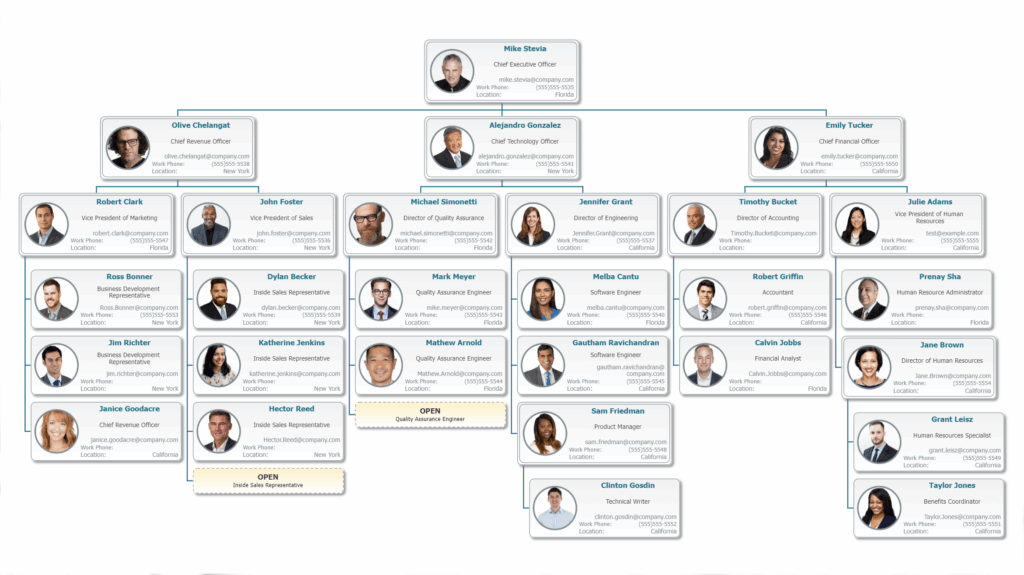
Step 5: Create Product Organizational Charts
Visualize and fine-tune your new structure through the use of organizational charts. Solutions like OrgChart can help you easily modify and plan out your product org chart as needed.
In your product structure tree, clearly define reporting relationships, cross-functional collaborations, and how teams will interact.
Ready to Visualize Your Product Organizational Structure?
See how OrgChart helps product leaders map reporting lines, align teams around key product goals, and adapt their structure as priorities shift, all with drag-and-drop simplicity.
Trusted By Thousands to Chart Millions






























Step 6: Implement Changes
Communicate the rationale and anticipated benefits of product organizational structures to employees. Provide necessary training to equip teams with the skills needed in the new environment.
Consider a phased approach to minimize disruption and allow for adjustments. Continuous evaluation and feedback are also essential for optimizing the product-centric model.
Step 7: Establish Success and Evaluation Metrics
Determine which key performance indicators (KPIs) will be used to assess success and the need for improvement. Product organization KPIs to consider: revenue growth, customer satisfaction, and product adoption.
Align these KPIs with strategic goals and track performance over time. And when possible, use data to inform decision-making and optimize the product organization structure.
How to Transition to a Product Organization Structure
Transitioning to a product-centric structure can present challenges. Next, let’s discuss a few strategies to help you successfully transition.
Prepare for and Overcome Common Challenges
Common hurdles include:
- Resistance to Change: To mitigate this, clearly communicate the benefits of the new structure and involve employees in the process.
- Role Ambiguity: Prioritize creating clear job descriptions, and offer cross-functional training when needed.
Leverage Tools and Processes
As you transition to a product organizational software, there are a few tools that can help expedite the process and ensure effective planning and implementation.
- Org Chart Software: Ideal for visualizing team structures and reporting relationships. Org chart software is especially helpful during the planning and brainstorming phase, since you can make quick changes in just a few clicks.
- Project Management and Communication Software: Ideal for facilitating collaboration, communication, task management, and timeline tracking, especially once your organization rolls out the new product structure.
- Product Roadmap and Design Software: Ideal for visualizing product strategy and prioritizing features. Design tools encourage real-time collaboration and can better connect dispersed product teams.
See How OrgChart Simplifies Product Team Planning
Watch how product-driven companies can use OrgChart to streamline team structures, boost collaboration, and stay agile as their product portfolios grow.
Best Practices When Designing Product Organization Structures
Here are a few more things to keep in mind when restructuring your organization:
- Maintain a Customer Focus: Prioritize customer needs and satisfaction throughout the product lifecycle.
- Use an Agile Methodology: Adopt agile frameworks to foster flexibility and adaptability.
- Leverage Data-Driven Decision-Making: Utilize data to inform product strategy and measure performance.
- Strengthen Your Leadership: Help leadership by providing clear direction and support within product teams.
Create Custom Product Organizational Structures with OrgChart!
A winning product organizational structure starts with a strategic plan and tools to help you visualize what’s possible.
OrgChart can help you visualize and manage your team’s success.
Build a Product Organizational Structure That Scales with Your Business
Discover how OrgChart empowers product-led companies to design, visualize, and manage structures that support growth, innovation, and customer focus.

What Our Customers Say About OrgChart






Carolina F.
Small Business
Verified User in Pharmaceuticals
Mid-Market (51-1000 emp.)
Jacqueline W.
Mid-Market (51-1000 emp.)
Jillian P.
Head of Talent Acquisition & Onboarding Mid-Market (51-1000 emp.)
Leo C.
Managing Director Mid-Market (51-1000 emp.)