


Clarity in organizational structure is paramount to success. This is especially true for large organizations. In a network of interconnected employees, teams, and departments, transparency in roles and responsibilities is necessary for fluid workflows.
Organizational charts, or “org charts,” provide a blueprint for navigating a company’s hierarchical landscape. These visual representations offer a bird’s eye view into the organization’s composition. While incredibly valuable, designing org charts for large organizations can be quite complex. With additional layers of management and higher numbers of staff and departments, condensing this information into a coherent visual representation can become overwhelming. Additionally, big companies experience frequent changes such as hiring and restructuring staff, mergers and acquisitions, and resignations and promotions. Maintaining accuracy with rapid changes is a challenge. Striking the right balance in detail while ensuring ongoing accuracy is critical for streamlining operations and achieving success.
Table of contents
Understanding Org Charts for Large Companies
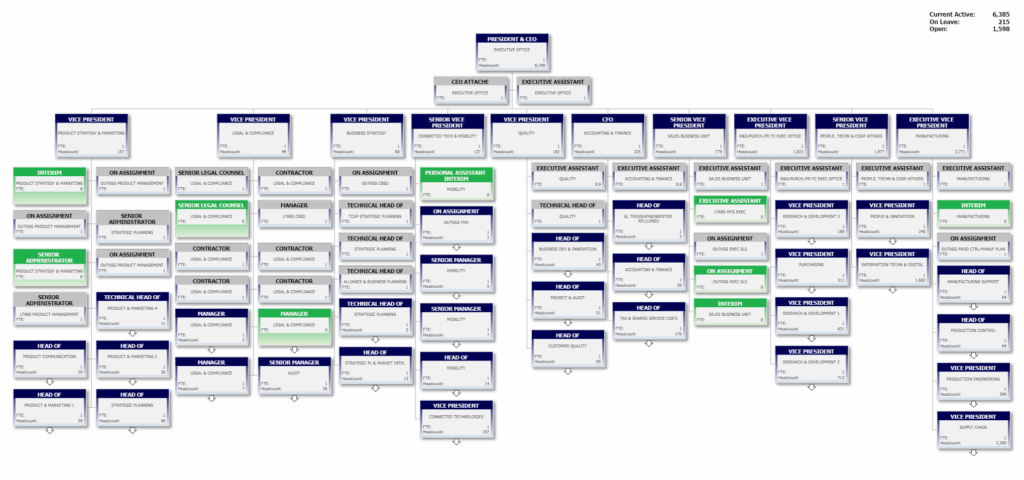
An org chart is a visual representation of an organization’s internal structure. These visuals illustrate many aspects of the organization, including staff demographics, roles and responsibilities, supervisory hierarchies and reporting relationships, departmental divisions, and more. Org charts provide employees, supervisors, and executives with a clear roadmap of the organizational landscape.
Org charts for larger organizations can differ from those of smaller ones. The most significant aspect of this is the complexity involved in a large organization. These companies usually have more intricate organizational structures. As such, the org charts must feature multiple layers of management, more departments, and interconnected teams.
Key Components
Org charts can be crafted to meet an organization’s individualized needs. Large organizations benefit from custom org charts that enhance their teams’ ability to compile and quickly locate necessary information. The following encompasses the key elements that an org chart may include:
● Employee names, titles, and departments
● Reporting lines and span of control
● Headcounts within each department or reporting line
● Roles and responsibilities
● Salaries
● Performance ratings
Benefits of Org Charts for Large Companies
Org charts offer many benefits for large companies. Some of the key benefits of an org chart include:
● Improves communication and alignment within and across departments and hierarchical levels
● Clarifies individual roles and responsibilities
● Supports growth
● Streamlines data-driven decision-making
● Enhances clarity and transparency
● Facilitates succession planning and talent management
● Contributes to organizational development initiatives
Challenges in Designing Org Charts for Large Companies
Larger organizations face many unique challenges when designing an organizational chart. It can take a substantial amount of time and effort to craft a chart that enhances efficiency and productivity with the nuanced nature of the company.
Some of the challenges in designing an org chart for a large entity include:
Managing Complexity–As a large organization, leaders must navigate the meticulous nature of complex and intertwined individuals, departments, teams, and hierarchical layers when creating an org chart. Condensing this complexity into a clear and concise visual representation is a challenge.
Ensuring Accuracy–Organizations of considerable size are dynamic and experience frequent structural shifts, from onboarding new staff to resignations, promotions, mergers, and acquisitions. Each organizational change results in adjustments to the org chart. Maintaining accuracy amidst ongoing organizational fluctuations can be difficult.
Balancing Detail with Simplicity–Presenting a comprehensive picture of the organization without making it overwhelming is a significant struggle. Many large organizations find it challenging to strike this delicate balance.
What Our Customers Say About OrgChart



Carolina F.
Small Business
Verified User in Pharmaceuticals
Mid-Market (51-1000 emp.)
Jacqueline W.
Mid-Market (51-1000 emp.)
Jillian P.
Head of Talent Acquisition & Onboarding Mid-Market (51-1000 emp.)
Leo C.
Managing Director Mid-Market (51-1000 emp.)
Best Practices for Designing Org Charts for Large Companies
HR leaders and executives must consider many factors when producing an organizational chart for a company of greater size and complexity. Let’s explore some of the best practices for designing an organizational chart for a large company.
Tailor the org chart to the company’s unique structure and needs
Regardless of size, every organization has a unique structure. Each company’s specific needs and goals are also different; thus, the elements within an org chart can vary. When designing a hierarchical structure, consider the following recommendations.
- Customization–Customize the chart to include the unique hierarchies within the company. Consider the distinctive divisions of departments, interconnected teams, and individual roles and responsibilities.
- Incorporate growth plans–Design the chart flexibly to accommodate forecasted growth, changes, and restructuring plans.
- Align with goals–First, ensure you have an accurate and comprehensive understanding of the strategic organizational goals. Then, evaluate how you can tailor the chart to emphasize these objectives.
Enhance readability and clarity
An organizational chart is only useful if it can effectively communicate the hierarchy and other key components of its structure. Implementing quality design elements can enhance the readability and clarity of a corporate org chart, improving its functionality. The following elements can support the design process to boost clarity.
- Clear hierarchy–A clear structural hierarchy can significantly impact the effectiveness of an org chart. Distinctly delineate the hierarchy with consistent formatting to indicate departments and reporting structures.
- Color coding–Utilize color coding to visually differentiate between departments, teams, categories, or other organizational functions.
Incorporate feedback from stakeholders
Feedback is a critical consideration when developing an org chart that meets the needs of a large corporation. Requesting feedback from stakeholders, including employees, managers, directors, investors, or anyone else with a vested interest in the company, is an essential component of developing a successful org chart. Engage stakeholders during the initial design phases, utilizing their feedback to modify and improve the chart before implementing it. Additionally, after the org chart is implemented, solicit feedback on an ongoing basis to ensure the chart continues to meet the ongoing and dynamic needs of the organization.
Tools and Technologies for Creating Org Charts for Large Companies
When creating an org chart for a large organization, leveraging the right tools and technologies is vital for ensuring accuracy and efficiency. There are many software solutions that are designed to meet corporations’ ever-evolving needs. Org chart software streamlines the process of creating and utilizing organizational charts. These software tools allow companies to build custom charts that visually represent their unique organization.
Considerations for selecting the right tools
Each org chart software is not created equal. Organizations must consider many factors to find a solution that accommodates their specific needs. When choosing an org chart software, consider your organization’s size, budget, and individual goals. Additionally, evaluate solutions based on the following factors to find the right fit for your company.
● Scalability
● Ability to incorporate complex structures
● Integration with existing HR software
● Specific desired elements, such as departmental headcounts, salaries, and performance ratings
● User reviews
● Data security measures
● Accessibility
Trusted By Thousands to Chart Millions






























Conclusion
Well-designed and executed org charts are critical for navigating the complexities of large organizations. They promote clarity while facilitating growth and supporting the company’s dynamic structure.
Automated org chart solutions like OrgChart, that specifically integrate with HR systems, provide organizations of all sizes with the support that they need in streamlining operations with personalized org charts.