


In the dynamic landscape of today’s fast-paced businesses, an ability to decode and understand the intricacies of organizational structure is paramount to success. Organizations are often complex, with many departments, functions, and individuals working toward a greater goal. This guide will shed light on the significance of organization analysis in strategic organizational planning, providing insights into why it is a critical component of an HR leader’s role.
Table of contents
- What Is Organizational Analysis?
- Understanding the Significance of Organization Analysis
- The Landscape of Organization Analysis
- Organizational Analysis Models
- The Process of Conducting Organizational Analysis: Step-by-Step Guide
- Application and Examples of Organizational Analysis
- Navigating the Tools and Techniques for Effective Organization Evaluation
- Decode Success with Org Chart
What Is Organizational Analysis?
Organizational analysis (OA) is a diagnostic process used to evaluate the overall status or “health” of an organization.
Resources, personnel, internal operations, and external factors are assessed to build a clearer picture regarding organizational strengths, weaknesses, inefficiencies, opportunities, and threats.
The goal of organizational analysis is to draw insights that inform new strategies and action steps.
Understanding the Significance of Organization Analysis
Organization analysis is the key to unlocking a company’s full potential. Company leaders gain a deeper understanding of its structure, functioning, and overall organizational health by systematically examining and evaluating the people, individual roles, departments, locations, and other facets.
Organizational analyses allow organizations to identify what is needed to achieve and maintain success, such as:
- Ensuring the alignment of the company’s vision and mission.
- Considering the organization’s strengths to continue building upon what works.
- Identifying areas of low performance, poor leadership, or inefficiencies.
- Developing plans for growth and succession.
- Analyzing financial performance.
- Pinpointing areas of risk or potential concern.
- Determining focal points of each department.
From startups to well-seasoned organizations, an organizational analysis is critical to give HR and other leaders a clear picture of how well the organization operates.
The Landscape of Organization Analysis
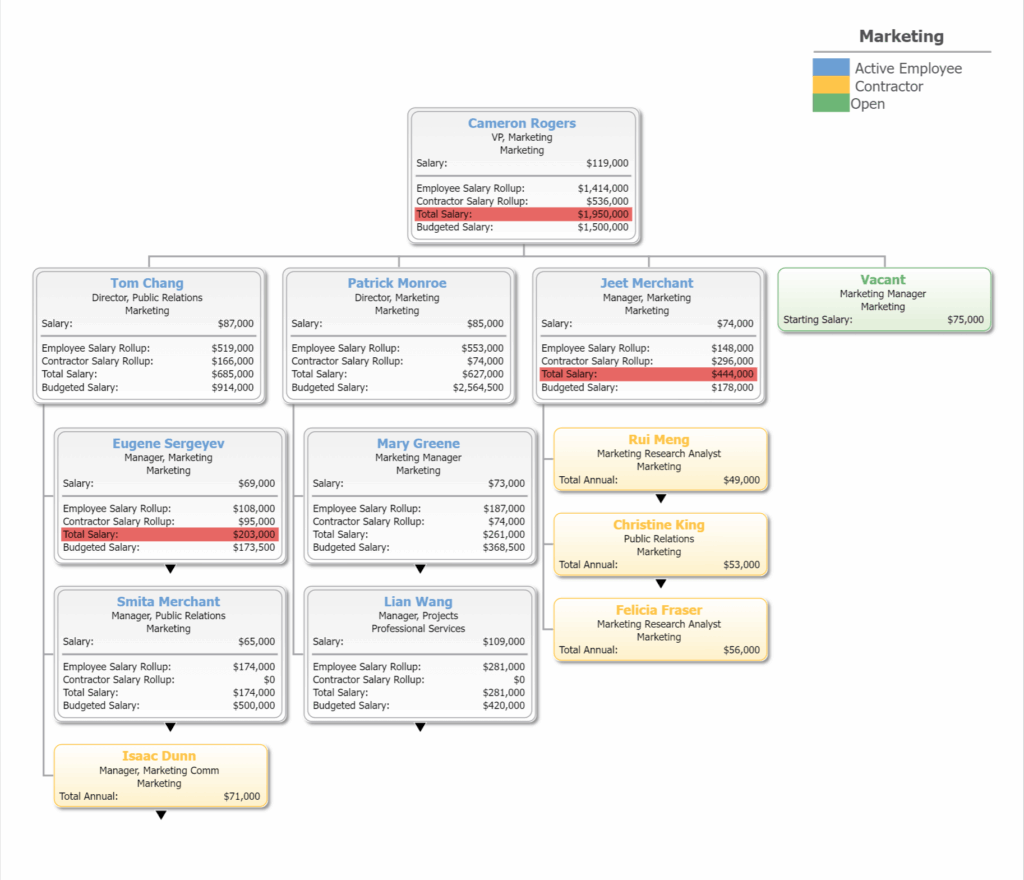
Organizations across industries are experiencing technological shifts during the ongoing digital age. As the structure of a company becomes more complex, many turn toward innovative digital solutions for organizational analysis. The integration of sophisticated technologies allows for dissecting organizational design in a clear, data-driven, actionable manner. The future of strategic organizational evaluation lies in digital integration.
Organizational Analysis Models
There are various types of organizational analysis models to choose from. Here, we’ll discuss several common models, the strategy behind them, and pros and cons. We’ll also discuss common use cases for each model.
| OA Model | Overall Strategy | Pros and Cons | Use Cases |
| SWOT Analysis | Identifies internal strengths and weaknesses, along with external opportunities and threats. | Pros: Simple and straightforward. Cons: Lacks in-depth analysis and specificity (compared to other models). | High-level overview of organization’s status. Basic status or “health check” of the organization. |
| SWOT-Opportunity Analysis | Builds upon a traditional SWOT by strategically combining strengths and weaknesses with opportunities and threats. | Pros: Goes a step further than SWOT. Provides more actionable, tailored insights. Creates a strategic roadmap. Cons: Dependent on the depth and accuracy of the original SWOT analysis. | Strategic planning. Action planning. Transforming SWOT insights into action. |
| PESTEL Analysis | Analyzes political, economic, social, technological, environmental, and legal factors affecting the organization. | Pros: Comprehensive and ideal for analyzing external influencing factors. Cons: Captures broad trends versus specific action steps for an individual organization. | Holistic analysis of market and industry trends. Risk assessments of external factors. Broad, contextual insights in which the organization operates. |
| McKinsey 7-S Framework | Assesses the alignment of 7 interconnected elements (Strategy, Structure, Systems, Shared Values, Skills, Style, Staff). | Pros: Holistic view of internal alignment. Specific and detailed. Data-driven. Cons: Complex to conduct. Requires substantial data collection. | Comprehensive analysis of internal alignment with goals. Measuring organizational effectiveness. Organizational restructuring. Change management. |
| Burke-Litwin Model | Identifies 12 variables across 3 organizational levels (individual, work unit, and total system). | Pros: Comprehensive and performance-focused. Data-driven. Cons: Complex and time-consuming to collect data. | Discovering root causes of performance issues. Long-term strategic management. Addressing workforce culture shifts. |
| Weisbord Six Model | Analyzes areas of improvement regarding purpose, relationships, organizational structure, rewards, leadership and support mechanisms. | Pros: Analyzes multiple nuanced and interconnected aspects of a business. Cons: Time-consuming to collect information and draw insights. | Addressing complex issues like company culture and team building. Organization restructuring. Identifying cross-functional collaboration gaps. |
| SPACE Framework | Identifies position and competitiveness based on primarily external factors. | Pros: Simple and quick to generate. Cons: More subjective and less data-driven. Lacks detailed insights. | Strategic position analysis (including strategic health in comparison to competitors). Competitive advantage identification. |
As you can see, there are many types of organizational analysis models, and many have varying levels of specificity and data collection needs.
Some organizations may use certain organizational analysis models during different stages of the business, such as when expanding into new markets or experiencing unprecedented competition.
What Our Customers Say About OrgChart


Carolina F.
Small Business
Verified User in Pharmaceuticals
Mid-Market (51-1000 emp.)
Jacqueline W.
Mid-Market (51-1000 emp.)
Jillian P.
Head of Talent Acquisition & Onboarding Mid-Market (51-1000 emp.)
Leo C.
Managing Director Mid-Market (51-1000 emp.)
The Process of Conducting Organizational Analysis: Step-by-Step Guide
Regardless of your chosen OA model, we’ve put together a step-by-step guide to navigate organizational analysis for your own organization. But before diving in, here are some additional notes:
Organizational Analysis Considerations
- Organizational Size: Your chosen approach may differ based on the size of your organization. Smaller businesses might require a more streamlined, to-the-point analysis, while larger enterprises may benefit from a more in-depth approach.
- Resource Constraints: Be realistic about available resources (including time) when conducting the analysis. Allocate resources strategically to ensure a thorough, yet efficient process.
- Goal Alignment: Remember, the analysis should always be guided by the specific goals you’re trying to achieve. Don’t lose sight of your goals. Choose models and data collection methods that provide insights relevant to those goals.
Step 1: Define Your Goals and Scope
When goal setting, clearly define what you aim to achieve with the analysis. Is it to improve efficiency, identify growth opportunities, or assess overall performance? Do you need to include external factors, or will an internal analysis suffice?
Aligning the analysis with your specific goals will help focus your efforts (and utilize your resources wisely).
When determining scope, decide on the breadth of the analysis. Will it encompass the entire organization? Or, should you focus solely on a specific department or process? Consider your resources and the level of detail needed.
Step 2: Assemble Your Team and Stakeholders
Include key stakeholders early on in the process, especially when defining your goals and scope.
When conducting an organizational-wide analysis, involve key stakeholders from different departments. This ensures a well-rounded perspective and facilitates buy-in for recommendations later.
Consider including representatives from management, operations, finance, and marketing (depending on the scope).
As you begin to allocate resources, be realistic. The level of effort required will depend on the organization’s size and the chosen OA model.
Step 3: Choose Your Organizational Analysis Model
Refer to our table above for help.
Select the organizational analysis model that best aligns with your goals and the data you will have available to you. If needed, you may choose to use multiple OA models for different goals.
Some models (like SWOT) are fairly versatile. Others (like PESTEL) focus on specific aspects. Consider using a combination of models for a more comprehensive analysis.
Step 4: Conduct the Necessary Data Collection
You may need to gather data internally from financial statements, operational metrics, employee surveys, and customer feedback reports. Also consider interviews, focus groups, and archival research.
And, if relevant to your goals and chosen OA model, gather external data about market trends, competitor analysis, and industry reports.
For planning and resource management, be sure to allow enough time for data collection.
Step 5: Perform Data Analysis and Interpretation
Once collected, organize your data in a way that facilitates analysis based on your chosen OA model. This may involve creating charts, graphs, or tables. For more subjective analysis (like a SWOT and SPACE) discover how you can easily consolidate and make sense of subjective information.
Identify patterns, trends, and relationships within the data. To make your analysis easier, consider creating visualizations of the data.
Step 6: Develop Recommendations and Action Plans
Based on your analysis, develop actionable recommendations for improvement. Prioritize recommendations based on their potential impact and feasibility. This prioritization may be easier to conclude from more in-depth OA models like the McKinsey 7-S (versus SWOT).
Next, you’ll want to create a clear action plan outlining the specific steps to be taken, timelines, and responsible parties. Depending on your chosen OA model, you may have to spend significant time creating the action plans. Plus, ensure alignment with your overall business goals.
Step 7: Communication and Implementation
Communicate the findings of the analysis and the proposed action plans to all relevant stakeholders. Transparency fosters buy-in and facilitates successful implementation.
And once approved, begin implementing the action plan according to the established timeline. Monitor progress and make adjustments as needed.
By following these steps and considering the key points, you can conduct a valuable organizational analysis that paves the way for improved performance and increased success.
Application and Examples of Organizational Analysis
Now, let’s look at organizational analysis in action. Even well-known companies like Coca-Cola have to take a step back and conduct organizational checks to continue being successful.
Coca-Cola Conducts SWOT Analysis to Accommodate Sweeping Consumer Trends
Here are 3 additional scenarios to demonstrate how organizational analysis is used to deliver positive business outcomes and next-step action plans.
| Business Scenario | Goal | OA Model(s) Used | Outcomes |
| Tech Startup | Discover opportunities for growth, market expansion, and a competitive edge. | VRIO Framework + Porter’s Five Forces Analysis | With the VRIO Framework, the startup discovers a technical advantage in their product. However, Porter’s Five Forces shows a highly competitive market with established players. Their plan: Focus their efforts on a niched market with lower competition. Highlight their technical edge over competitors. |
| Manufacturing Company | Find ways to improve operational efficiency and discover how to reduce costs. | Value Chain Analysis + SWOT Analysis | With Value Chain Analysis, the business can identify areas to improve inefficiencies in their process. The SWOT analysis identifies weaknesses like outdated equipment and the rising costs of materials. Their plan: Invest in equipment upgrades to address their weaknesses and explore alternative suppliers to reduce material costs. |
| Retail Chain | Identify reasons why in-store foot traffic has decreased and how to improve it. | PESTEL Analysis + SWOT Analysis | The PESTEL Analysis highlights an uptick in ecommerce. The SWOT Analysis identifies the company’s poor online presence as a weakness. Their plan: Develop a robust ecommerce platform and leverage their established brand reputation to attract online customers. |
Navigating the Tools and Techniques for Effective Organization Evaluation
Effective organization evaluation is not a one-size-fits-all endeavor. It requires a thoughtful combination of tools and techniques. Leaders must consider the unique dynamics of their organization, industry trends, and the desired outcomes of the analysis.
A comprehensive organizational evaluation starts with a high-level review of the organization’s mission, values, goals, key performance indicators, departmental roles, and individual employees. This is often conducted via a SWOT (Strengths, Weaknesses, Opportunities, and Threats) analysis. Systematically taking an in-depth look at each component of the organization allows leaders to ensure things are running smoothly and identify gaps, barriers to success, and inefficiencies.
Utilizing a digital organization chart that seamlessly integrates with various data sources and software systems makes for a more seamless organizational performance assessment. This increased visibility allows for enhanced insight while assessing key components of the organization, such as salary by department, diversity metrics, and staff responsibilities.
Employee, customer, and stakeholder surveys are another beneficial tool for effective organization evaluation. The people working day-to-day are likely to have critical information about challenges within the company and ideas for areas of improvement. Customers/clients and stakeholders can also provide vital feedback to guide organizational initiatives and plan for the future of the company.
The Role of HR Analytics in Organization Analysis
An organization’s most valuable asset is its people. As such, HR professionals play a key role in organizational analyses. HR leaders strategically use people analytics to understand, manage, and optimize the most crucial aspect of the organization–the employees.
HR analytics consists of extracting and analyzing key information, such as:
- Turnover and retention rates: Identifying teams or departments with the highest and lowest retention rates to assess areas of high attrition risk and better allocate training and resources.
- Employees at risk: Evaluating individuals to identify employees with lower performance and thus at risk for turnover.
- Talent: Considering high-performing employees who may be ready to move into a new role.
- Span of control: Recognizing when someone may be overburdened with direct reports or not have enough resources to perform their job
Data-Driven Insights for Optimizing Organizational Performance
Organizational data is the anchor for driving actionable insights. Taking a data-driven approach to organization analysis empowers decision-makers to look beyond anecdotal support, ensuring decisions are grounded in evidence. Concise and well-maintained data will provide a wealth of information to offer leaders a comprehensive understanding of the patterns, trends, and correlations that impact their business. Sometimes, inefficiencies, bottlenecks, and areas of waste are not immediately apparent. However, analyzing the data related to these factors can provide a more accurate picture. For example, anecdotally, department heads may speak positively about particular employees. Yet, when taking a data-driven approach to analyzing individual productivity, they are found to be low-performing and at-risk employees in need of additional support and training.
Strategies for Aligning HR Initiatives with Organizational Goals
Conducting a data-driven organizational analysis plays a pivotal role in guiding HR initiatives. It provides strategic insights into ensuring HR goals integrate seamlessly with the organization’s mission.
At the core of a human resource professional’s role lies a profound understanding of organizational structure and culture, and operational dynamics. An organization’s future success and operational health depend on the systematic evaluation of various components, including workforce composition, communication channels, leadership structures, and more.
Decode Success with Org Chart
Comprehensive organization analyses are vital for guiding organizations through the complexities of the business world. By decoding the intricacies of the organization’s structure, leaders can make informed decisions that drive success.
Unlock the potential for transformational success with OrgChart.
What Our Customers Say About OrgChart
Carolina F.
Small Business
Verified User in Pharmaceuticals
Mid-Market (51-1000 emp.)
Jacqueline W.
Mid-Market (51-1000 emp.)
Jillian P.
Head of Talent Acquisition & Onboarding Mid-Market (51-1000 emp.)
Leo C.
Managing Director Mid-Market (51-1000 emp.)