


A well-structured HR department is pivotal to the success of an organization and its people.
Having clear roles and responsibilities can boost productivity, improve workforce management, encourage employee development, and ensure labor law compliance.
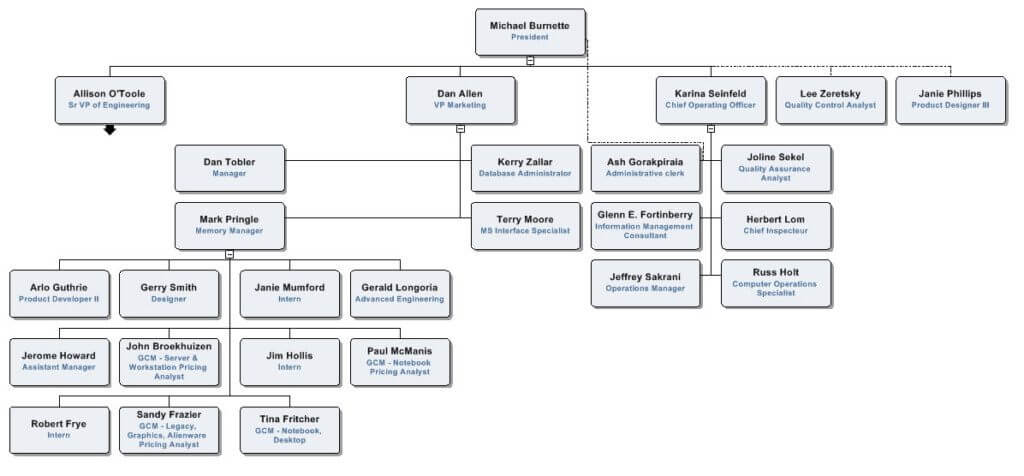
Many companies rely on org charts to create a visual representation of a department’s structure, showcasing reporting lines, roles, and responsibilities.
In this article, we will explore the importance of HR org charts and how they contribute to a strategic HR department structure.
By implementing the right team structure, companies can streamline processes, enhance collaboration, and align HR with objectives.
Table of contents
What Is an HR Department Structure?
HR department structure refers to how HR roles are organized within a business. It determines the hierarchy, reporting relationships, and division of responsibilities within the HR department.
There are a few common types of HR department structures, including:
- Hierarchical: HR professionals have a vertical chain of command. This allows for each level to manage specific tasks while high-level HR leaders focus on larger initiatives.
- Functional: HR professionals are grouped based on areas of expertise. This allows for specialization within each role and ensures that experts are handling specific tasks.
- Matrix: HR professionals are organized based on their area of expertise and the teams they support. This promotes collaboration and integration between HR and other departments to fuel even better employee experiences.
- Outsourced: HR functions are performed by an external party, freeing up various HR tasks for the in-house team members.
What Are Common Tasks of an HR Department?
The HR department takes on various tasks for the organization including recruitment, training, performance management, and employee relations.
HR professionals may also manage employee compensation and benefits, organize employee skill development, and drive morale-boosting initiatives for the team.
With diverse responsibilities, it is essential to delegate these tasks to the appropriate HR professional.
For large companies, a human resources org chart can help leaders visualize and understand the resources and skills within a large number of people.
For smaller companies, an HR org chart can help organize responsibilities to make them as equal as possible, especially when their people serve many roles.
What’s the Purpose of an HR Organizational Structure?
The main purpose of an organizational chart is to clarify roles, responsibilities, and reporting relationships.
Businesses with clear HR departmental organization often experience better allocation of resources. They can also explore new ways to boost employee engagement and development based on team skills and needs.
With the help of an HR org chart software, they can identify employment gaps and determine how to best leverage their people to achieve organizational goals.
This visualization facilitates better clarity for decision making, especially when intuitive, adaptive HR software tools are used.
How Does an Effective HR Structure Benefit the Organization?
Here are some benefits of formulating an effective human resources department structure:
| Improved employee morale People thoroughly understand their roles and how they play an important part in the organization. | Higher productivity Confusion about where responsibilities fall is reduced, and people are able to focus on their own tasks. | Reduced turnover Employees are less overwhelmed because task delegation is logical and well-planned. |
| Retaining top talent Professionals are tasked with what they do best, and the hierarchy of responsibility is clear. | Aligning HR with objectives Positions can be filled and redesigned to ensure you have the right kinds of people in specific roles. | Positive work culture Stress is reduced since task delegation is strategic and everyone serves a specific purpose. |
Key Components of a Modern HR Department
Modern HR departments must meet the changing needs of both the workforce and the organization. This can be a very challenging task – especially when cultural, economical, and financial constraints are at play.
To modernize your own HR department, here are key components to embed into your overall HR department structure and responsibilities:
- Successful talent acquisition: To grab the best talent, it is important to stay competitive with pay rates, benefits, and work-from-home options.
- Optimal employee experience: Empowerment, employee satisfaction, and skill-building initiatives can help reduce turnover and boost morale. This also includes employee wellness and mental health.
- Diversity, equity, and inclusion (DEI): The most effective teams draw from diverse experiences, ideas, and insights.
- Regulatory compliance: To avoid penalties and safety hazards, make sure you are well aware of applicable labor laws.
How to Structure Your HR Department
You can customize your human resources department structure based on organizational size, industry, and goals. Here are some best practices to follow when crafting your HR department structure:
| Analyze the specifics | Investigate the strengths and pain points of your current HR department. Establish a shortlist of business goals that can be used to inform your HR organizational structure.Research common HR structures from companies within your industry that have a similar company size. |
| Define HR functions | Make a list of current functions that the HR department performs. Note areas of high and low task concentration to help you equally disperse responsibilities later on.Include a list of tasks you would like HR to perform to modernize the department (e.g., DEI, new technologies). |
| Follow a structure | Determine which human resources organizational structure is most appropriate.Use employee feedback and industry examples to help you decide. Customize the standard structure to align with your current workforce and future capabilities. |
| Design job roles | Define roles within each HR function, outlining responsibilities, skills required, and reporting relationships.Determine if and where you will need specialist roles and generalist roles.Consider what roles will be needed in the near future to inform hiring initiatives. |
| Establish communication channels | Ensure HR leadership is involved in the entire process so they can implement new changes. Create reliable communication channels that make it easy for employees to contact HR.Use communication tools and technology to streamline the process. |
Ready to Visualize Your HR Department Structure?
Discover how OrgChart helps HR leaders design clear, data-driven org charts that define roles, improve collaboration, and align HR operations with business goals.

Org Chart is trusted by 2,000+ HR teams worldwide.
How to Make an HR Organizational Chart
Many companies use technologies like OrgChart to easily visualize the HR department structure. Here is a step-by-step guide to creating an org chart for your own company.
Step 1: Gather All the Relevant Information
Refer to the section above about what information to include. You’ll also need to gather contact information, reporting lines, role responsibilities, and job titles.
Pro tip: The more detailed and data-driven you can be, the better. Luckily, org chart software can easily integrate with your HRIS system to pull relevant information.
Step 2: Choose a HR Software Tool
Gone are the days of manual org charts! Now, you can choose from a variety of organizational chart software to ensure you have an adaptable org chart template that will grow with your organization.
Pro tip: Choose a tool that can integrate with your HRIS system, continuously update for real-time data, and can be shared in various formats.
Step 3: Create a Wireframe Org Chart
Build your basic HR department structure and rearrange as necessary. If you will eventually want to share this chart, you may want to add your brand logo and brand colors to the template as well.
Pro tip: Some org chart software tools offer user-friendly, clean interfaces. Feel free to check out what OrgChart looks like in action.
Step 4: Input Your Positions and Information
Populate your human resources org chart with basic information and additional details to help with future insights and decisions. This could include salaries, time until retirement, and other data-driven details to inform where you need to make changes.
Pro tip: Color code the positions based on duties, functions, and/or direct reports.
See How Modern HR Teams Build Dynamic Org Charts
Watch how companies can use OrgChart to automate HR org chart creation, integrate real-time HRIS data, and maintain accuracy across every department.
Navigating Change: Strategies for Restructuring HR Departments
HR leaders play a key role in managing the restructuring process, and there are various resources to help them!
When the time comes to restructure your HR department – whether due to mergers, acquisitions, changes in strategy, and/or new advancements in HR technology – having an HR org chart tool like OrgChart makes the process seamless.
Make sure your restructuring plan includes the following to ensure a smooth, efficient transition:
- Clear communication: Most (if not all) HR team members should understand the reason for departmental restructuring and how it will affect their jobs and day-to-day tasks.
- Adequate training: If certain positions will be acquiring new tasks, make sure existing and new employees are trained appropriately.
- Stakeholder engagement: Before moving too far into HR department restructuring, be sure to collect stakeholder input for buy-in and to avoid roadblocks.
Measuring HR Department Effectiveness: Key Metrics and KPIs
Now, let’s discuss metrics and key performance indicators (KPIs) that illustrate the impact of a well-structured HR department (and can inspire improvement).
| What it measures | Industry standard | |
| Employee turnover rate | A percentage of employees who leave the organization within a specific time frame (usually a year). High turnover rates indicate retention problems and can be costly. | 10-20% |
| Time-to-fill vacancies | The average time it takes to fill a position. A long time-to-fill indicates recruitment issues or inability to secure candidates. | 30-60 days |
| Cost-per-hire | The total cost associated with advertising, recruiting, and hiring a single position. This could include agency fees and onboarding costs as well. | Industry and seniority-dependent. Average is $4700+ (SHRM). |
| Training ROI | The cost of training against the benefits of performance and reduced turnover. | Aim for a positive ROI. |
The Future of HR Department Structures: Trends & Emerging Practices
HR department structures are changing with the needs of businesses and workers alike.
With advancements in HR technology, certain tasks are now performed using AI and automation, freeing up time for HR professionals. Data-driven insights are also becoming the industry standard.
As we continue forward, many human resources organizational structures will likely become more agile and decentralized, especially due to remote and hybrid workforces and an uptick in the gig economy.
No matter how the working world changes, make sure you have a flexible HR org chart that can adapt to your needs in real-time.
Build a Future-Ready HR Org Chart with OrgChart
Experience how OrgChart empowers HR leaders to create adaptable, scalable org charts that evolve with your workforce so your HR department stays aligned, agile, and strategic.
What Our Customers Say About OrgChart





Carolina F.
Small Business
Verified User in Pharmaceuticals
Mid-Market (51-1000 emp.)
Jacqueline W.
Mid-Market (51-1000 emp.)
Jillian P.
Head of Talent Acquisition & Onboarding Mid-Market (51-1000 emp.)
Leo C.
Managing Director Mid-Market (51-1000 emp.)